Energy Crisis drives Energy Efficiency
Sustainability Project Update #14

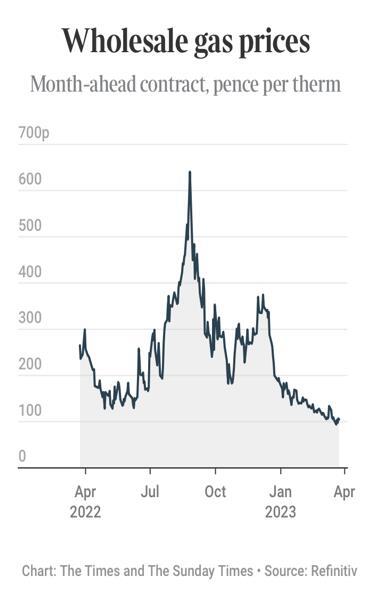
A year after the start of the war in Ukraine and the ensuing energy crisis we are all feeling the impact of these shocks and the resultant surge in inflation to a 45 year high. The UK was not alone in having to cope with this dramatic, unexpected situation. Governments and peoples across Europe have had to take swift action to conserve energy supplies and look for alternative suppliers to replace Russian gas. One of the outcomes has been to make most households consider their energy consumption and where possible reduce it. This has had the benefit of reducing household carbon footprints which is to be welcomed.
We have reached the Spring with none of the power cuts which were predicted, helped by a milder but grey winter but we have all played our part in avoiding that situation too. As energy prices on world markets have dropped and the government’s household energy bill support scheme has ceased, we should take stock of our efforts to reduce energy consumption and plan over the coming months on how to consolidate our consumption reductions as more changes are sure to follow.
We should note the progress made. Going forward, continue to make the savings and try to make more by doing some of those other ideas which we probably all had, but put off this year due to lack of time or the cost.
Improving the insulating in your home is a great place to start as everyone will benefit from making sure their homes are as well insulated as possible and we all need to do something about this although it is not always straight forward.
The time for Action is now; make a list and prioritise what you want to do and can afford. You don’t need to do everything at once – after all Rome wasn’t built in a Day
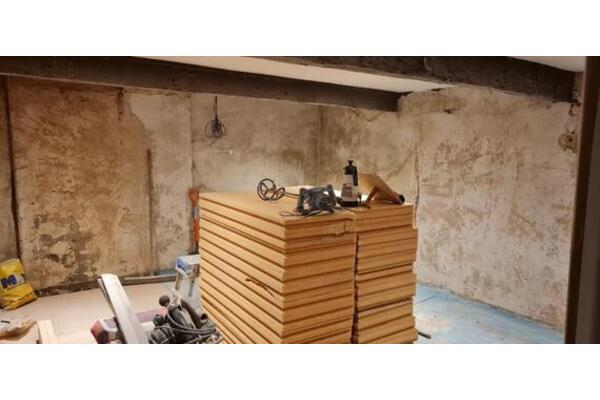
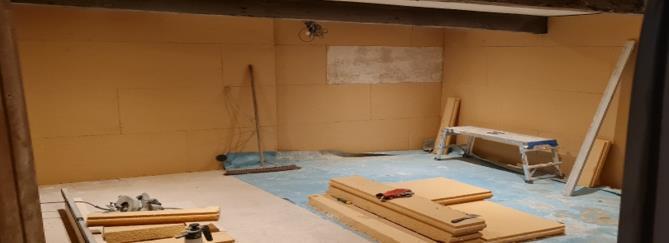
Bare walls before lining with special breathable insulation boards
Two local residents have told us of their recent experience of home insulation.
One property is in an old stone-built house and they have successfully added insulation which allows the solid limestone walls to breathe, as it must do or it will suffer from damp.
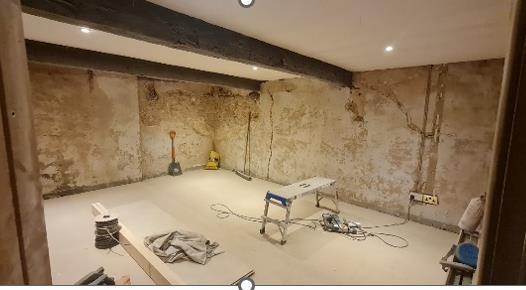
After lining the four bedrooms, the heating requirement is now absolutely minimal with 3 bedrooms now unheated through the winter since the work was completed. Heat rises through the house and warms the upper insulated space. This is akin to the Passivhaus – an eco-design standard for new builds which aims to insulate to a standard such that only minimal heating is required to provide a comfortable home.
The key lesson is that just about all properties can be retro-insulated albeit some are not easy to do and can be expensive.
The second property is relevant to just about everyone. It Is a detached house built about 2000. The owners decided to install an Air Source Heat Pump. Prior to installation, the contractor conducted the normal building survey and found the existing wall cavity insulation was only 25mm and advised that more was needed. Soon afterwards the insulation contractor arrived to pump more foam insulation into the cavity. His view was that there must have been areas where insulation was missing due to the higher than anticipated volume being pumped into the cavity. The home owners are delighted with the new heating system and report that the house is very snug and the air source heat pump is performing very well.
There are two lessons drawn from this property – the first is that even a relatively new house can benefit from additional insulation and the second is ‘You don’t know what you don’t know’. The owners thought their house, being new was well insulated.
Roof, wall and underfloor insulation is one of several energy efficiency measures which can be taken. Many websites now give examples of what can be done. However, as we have shown in previous updates ‘what you measure you manage.’ A typical example of this was at the Community Centre after measuring our electricity consumption via our solar edge PV real time performance app was that our immersion heater was permanently switched on and consuming around 5kWH of electricity per day even though the water heating was not needed. Once discovered, it was quickly turned off.
Recently, another example came to light at the Football Club when regular monitoring identified that a tap had been left running. Fortunately, it was found relatively quickly (after almost a week) and no damage was done – except to the water bill.
We suggested earlier making a list of your energy efficiency options whilst recognising that it is unlikely everything can be done at once. Cumulative energy efficiency measures however can make a dramatic difference.
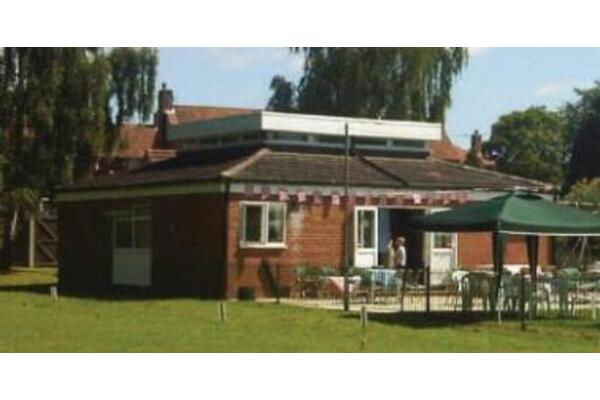
The Community Centre built in 1971 used 25 kWh of electricity to heat and light a 2hr meeting
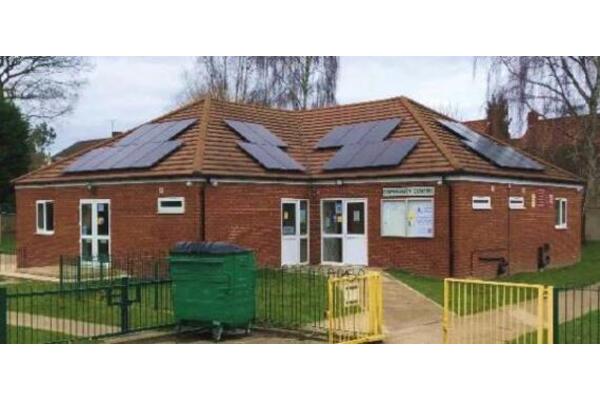
The Community Centre enlarged in 2014 now normally uses 20 kWh of electricity and 10 kWh of gas per day
Since 2007 many energy efficiency measures have been put in place and today the centre consumes only around 20 kWh of electricity and 10 kWh of Gas – on a typical winter day.
The redeveloped Centre is more than twice as big and used much more. The Centre is regularly in use from 7am to 9pm - 14 hrs per day.
That is a massive reduction in power consumption, costs and CO2.
On a comparative basis if nothing had changed – consumption would have been around 175 kWh per day.
Last week the Government announced its latest plans to meet our Net Zero commitment through a diverse range of measures which will also help us become Energy Secure and eventually Energy Independent. It is clear that electricity is going to become our basic form of energy as it is unlikely that there will be a cost-effective silver bullet to replace our domestic gas. The basic price of gas is also set to rise over time as government tariffs are moved from electricity to gas in an effort to make it less attractive as an energy source. The plan also extended until 2028 the £5000 grant towards installing a heat pump.
We are pleased to report that by the end of this summer an Air Source Heat Pump will be installed at the Community Centre and again as with our other new equipment we will measure and manage its performance to pass on the learning to you.
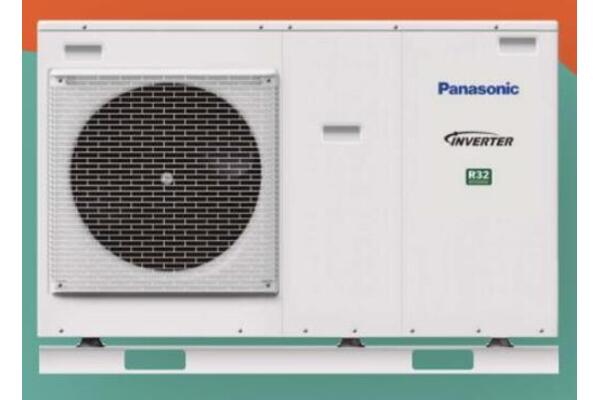
A typical Air Source Heat Pump
The Primary School has a Ground Source Heat Pump, installed and commissioned last autumn and Headteacher Rick Weights reports that it is working very well. They have removed their gas boilers and thereby reduced consumption by around 95% as gas is still required for cooking in the school kitchen.
Later this year we will be offering opportunities to see them working and to ask questions. This is a great opportunity to ‘put your toe in the water’ and understand these systems before you make a purchase.
We are delighted to report that as a result of the energy crisis demand for Solar PV Panels and Batteries has increased significantly, including by a number of our local residents. The reports from everyone are very positive.
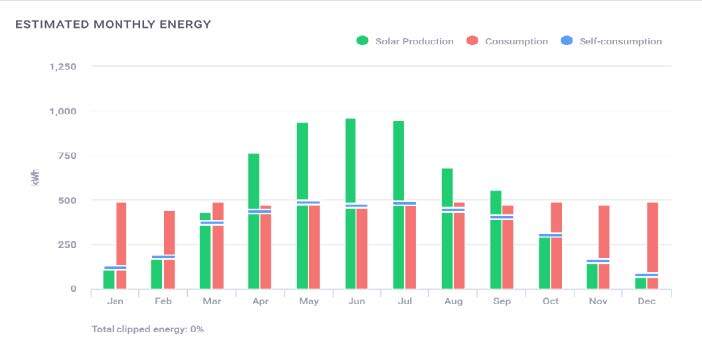
Panels have now been installed at the Community Centre for 2 years and we can compare their performance against estimates by the contractor pre installation. We are pleased to say the panels are out performing the forecasts… maybe it’s a sign of sunny weather over those 2 years or maybe not.
However, at this stage the performance is very reassuring.
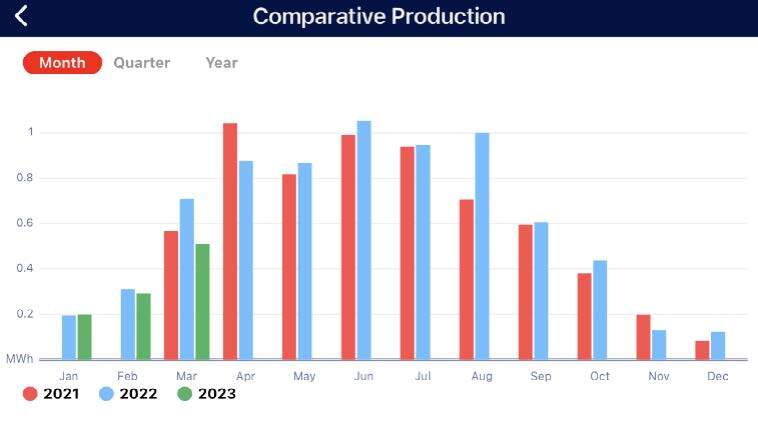
A word about the weather; the production graph gives a good indication about what sort of weather we have ‘enjoyed’. Do you recall the glorious weather during the first month of the lockdown in 2020 – it shows quite clearly in the graph (the red bar in April). By comparison, whilst March 2023 has beaten the contractor’s estimated production performance it has been the wettest March in the UK since 1981. It shows in the data (the green bar in March).We all know it’s been dull – a lot more than last year. However, overall, 2022 was the sunniest on record in the UK.
We wrote in our last update that our twin project objectives were to create Carbon Neutral Community Buildings and to share our learning and data with similar communities and organisations.
We are delighted to say this continues to happen as we have helped other communities in North Yorkshire with advice and guidance on how to start on the journey to sustainable buildings in their communities: Lastingham, Brantingham, Thorner, Barlby, Kilham and Elloughton.
We have loaned our Thermal Imaging Camera to the Our Zero Selby (OZS) Project and trained their volunteers how to use it to survey Brayton Community Centre and resident’s homes.
For those that don’t know the Our Zero Selby Project was initially a 2 year project aimed at understanding what the residents of Selby would like see as a community as a ‘Just Transition’ from a town which was once heavily reliant on carbon intensive industries; Selby coalfield and coal fired power stations to a decarbonised town. This involved a balanced panel of approx. 50 residents drawn from across the community who attended 3 facilitated focus group sessions. The outcome was 5 themes covering 25 topics. It was led by Selby District Voluntary Service (recently rebrand as ‘Up For Yorkshire’) Up for Yorkshire - Community Support - North Yorkshire). Up For Yorkshire are now leading several follow - on Sustainability Projects. See Our Zero Selby for more details.
Going forward, we will be sharing details of our sustainability projects with communities at Sand Hutton and Caxton, Church Fenton and Ryedale Environmental Group.
In addition, we are in the process of revamping our website so it will be easier to use and will hold more information which we hope will help both local residents and other communities.
Thank you for your support
The Steering Group and the Project Partners
Monk Fryston and Hillam Community Association. St Wilfrid’s Church and Church Hall
Hillam Cricket and Football Clubs. Monk Fryston Primary School
