Dealing with the Energy Price Shock
Sustainability Project Update #13


Our last Project Update headline was ‘Heat or Eat – now is the time for action!’ and never has a statement been truer. Everyone seems to be taking stock of how the energy price increases are going to affect them and are working out how to minimise their impact.
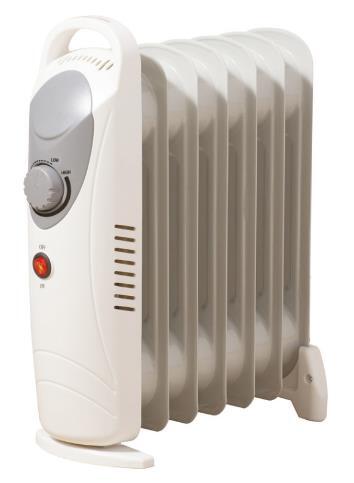
For many, this has been simple; they turned off the heating system and this worked well enough during our unseasonably, mild autumn. Others have reduced the number of rooms to heat and light. Some tried turning off heating the whole house and warmed one small room to sit, work or relax in, using stand-alone heating, perhaps a fan heater or oil filled radiator. Some people bought heated throws to sit under to watch TV or read and most of us have started to wear extra layers of clothing.
Of course, the main challenge is to make sure you are not wasting any fuel. This means turning things off and encouraging everyone to shut doors and turn off lights as they leave a room, not leaving things on standby nor boiling a kettle full of water for a single mug of tea or coffee. We heard at both showcase events how our CA Chair, Robin Parkin, managed to reduce his home energy consumption by 40% for an investment of around £100 in new controls. When we launch our new website, these energy reduction measures will feature as a case study.
Meanwhile, we recommend everyone to take note of the advice offered across all the media. Try what works for you at a cost you can afford and adopt a pragmatic approach. Much useful advice doesn’t involve any expenditure such as turning things off or turning down thermostats, putting on extra clothing or preparing food in a slow cooker, microwave or air fryer instead of the oven will save you loads of power. Whatever behaviours you adapt in your household, rest assured they will all be reducing carbon emissions and helping towards sustainable living.
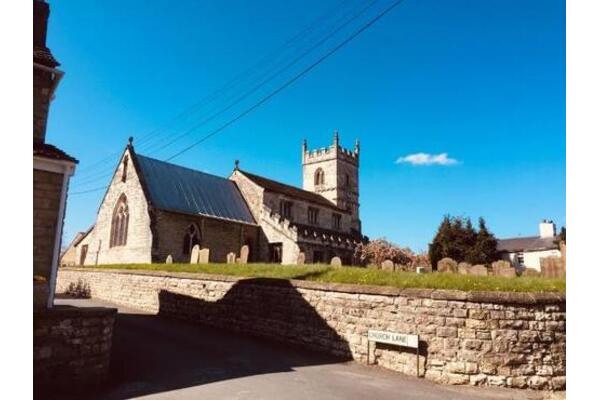
None of our Project Partners are immune from the energy crisis and some are better placed than others to cope with the energy price shock. St. Wilfrid’s Church and Church Hall are probably the worst placed.
The Church Hall is used almost non-stop as a community building Monday to Friday and often at weekends too. Unfortunately, when it was built in the late 1960’s, at a time when neither village had a Hall, it was built on a tight budget. This means that today we find the original building has no insulation, (recent surveys have shown that retrofitting wall cavity insulation is not feasible because of damp considerations) and the roof structure cannot support solar panels. It has the original 60’s fluorescent lighting and until recently it was heated by a gas boiler and supported by a second boiler supplying domestic hot water. The ancient stone Church is completely uninsulated and heated by an elderly gas boiler via big old cast iron pipes and radiators. The lighting was upgraded in the mid 2000’s with an array of energy hungry lights which show off its best features but they are far from energy efficient. It takes about 24 hours to heat the church to a comfortable temperature. One good feature is that in summer the church is a cool haven on hot days and a refuge from any heat wave.
To cap it all, both buildings are in the village Conservation Area and so have added hurdles to overcome before any significant changes can be made – first they need to get permission from the Church Authorities called ’a faculty’, and then get planning permission from the Council to make changes to a listed building in a Conservation Area.
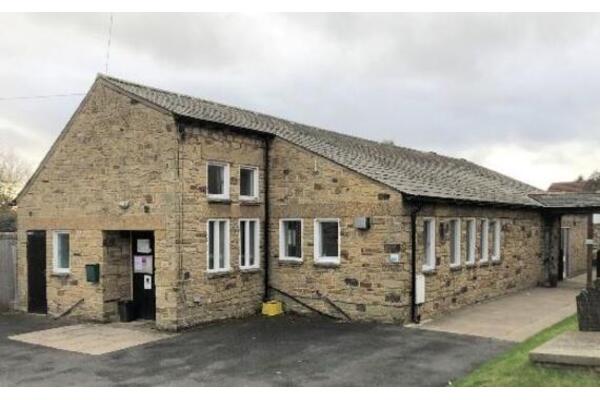
So, what options did they have? The Church Team took a pragmatic approach to minimise their expenses by doing what they could. In the Church Hall, they installed a new gas Combi boiler with improved controls to do the work of both aging church boilers (approx. 30 years old). As we all know new combi boilers are significantly more energy efficient. The option to install a heat pump would have meant completely insulating the floor, walls and roof and re-plumbing the pipework,the new energy efficient boiler was fitted in a day whereas the alternative would have taken the best part of a year even if the money could have been found to do it. So, it was a sound pragmatic decision.
Additional draught proofing and radiator reflectors have also been fitted to the hall and soon the fluorescent tubes will be replaced with energy efficient LED lighting.
Inside the church another pragmatic approach was taken. Apart from major services, the heating system has been turned off and instead the congregation is warmed by a couple of small fan heaters. These mini space heaters won’t warm the fabric of the building but will take the chill off the building. A big challenge was how to deal with the energy hungry lighting system; more pragmatism adopted again, as the Parochial Church Council (PCC) agreed a revised church lighting plan to serve the needs of different occasions.
Given the speed of change dictated by rapidly rising energy costs, the PCC have done a remarkable job in reacting to reduce their consumption and CO2 emissions.
Showcase Event October 11th: We held our second showcase event at the school and heard from some excellent speakers. Two spoke openly and honestly about the energy costs they are charged and their efforts to reduce consumption at home. Other residents shared their experience and success with their sustainability efforts. There was great interest and user contributions about installing and managing solar panels and batteries. We will be holding the next showcase event in spring 2023.
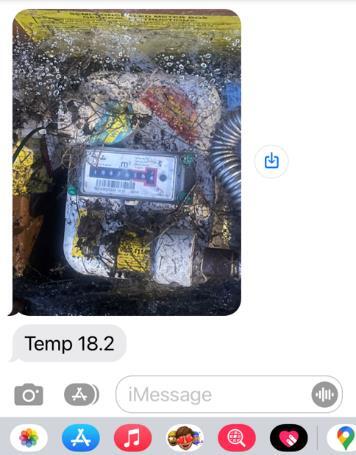
Preparing for the Community Centre Air Source Heat Pump Installation: As regular readers will know, we use real time data for our electricity consumption and generation via the Solar Edge app which was part of our solar panel and battery installation package. This provides excellent data and has helped make some remarkable savings – the saying is ‘what you measure you manage’.
We do not have similar data for our gas consumption; which powers our underfloor heating system – but now thanks to village resident Lorraine Corns, we are manually gathering consumption and hall temperature data 3 times a day; in the morning, mid-afternoon and evening. In due course we will use this data to measure the effectiveness of the air source heat pump over a full year. We hope it will answer an important question – do heat pumps work and do they provide enough heat compared to gas boilers?
The School Ground Source Heat Pump - Installation and Commissioning: The quick update from Headteacher Rick Weights is that the installation was delayed but completed during half-term and it is working well. Perhaps it is too warm where the heating uses the underfloor system but the conventional pipe and radiator system does need tweaking. It is early days and we will have fuller briefing in the next project update. The school are now looking for funds to install solar roof panels.
Spreading the word: Our twin project objectives were to create Carbon Neutral Community Buildings and to share our learning and data with similar communities and organisations. This has been happening!
Following the NY County Council press release and podcast which was featured in The Yorkshire Post, York Press and Selby Times we have continued to be busy this autumn. Most notably when Radio York broadcast a four-minute item about our project featuring the School, the Church and the Community Centre and used it as the lead-in item for their news coverage of the start of COP 27 in Egypt. It also featured a live interview with Robin Parkin, Chair of the Community Association.

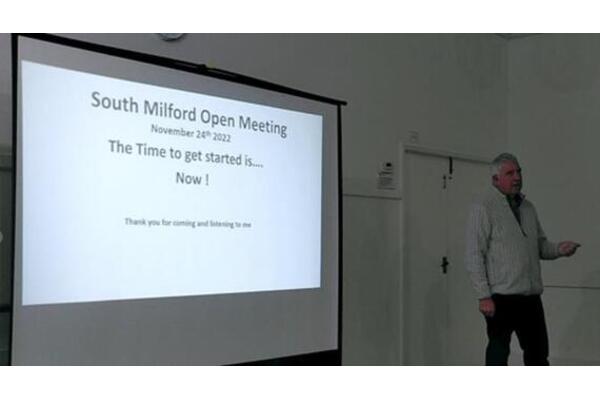
We also presented details of the project to Councillors on the Selby General Policy Committee; we gave the key note presentation on energy saving to 30 members of the East Riding Village Hall Network at their AGM in November and helped launch the South Milford Sustainability project at their recent Public Open Meeting.
We continue to contribute to the ‘Our Zero Selby’ Project and have given help to a number of other Village Halls around Yorkshire.
Finally, this week we featured on the opening page of North Yorkshire County Council’s new Climate Change Newsletter issued by ‘Beyond Carbon at NYCC’. Follow the link to view the Podcast https://youtu.be/eFP_8My7a78 and District villages becoming carbon neutral | Selby District Council to read the full article.
As we enter 2023 it could be easy to be despondent given all the downbeat news in the UK and around the World. However, one webinar attended recently (what did we do without zoom?) called a ‘Day in the Life of the Grid 2035’ indicated some positive steps towards a sustainable electricity supply.
It was hosted by Regen (www.regen.co.uk) an independent centre of energy expertise. They examined whether the National Grid could match the increased demands of a decarbonised electricity supply when fossil fuel sources are abandoned.
Regen looked at two extreme scenarios – a cold, still, dank, cloudy day in winter with no onshore wind or solar generation and a hot, cloudy, muggy summer day and found that the grid met the anticipated demand.
The National Grid are working hard to switch from their previous model of a few centralised power stations sending out electricity across the nation to one adapted to relaying power from a diverse range of suppliers both on and offshore. It necessitates a major infrastructure change to meet the Government sustainability targets set for 2035.
Thank you for your support.
With our Best Wishes for 2023.
The Steering Group and Project Partners
