Changing Times
Sustainability Project Update #11


When we set out on this journey, we did not know energy prices would rocket as they have done over the last 9 months; nor did we foresee a health pandemic and the ensuing supply chain problems, nor the war in Ukraine and the cuts to Russian gas and oil supplies.
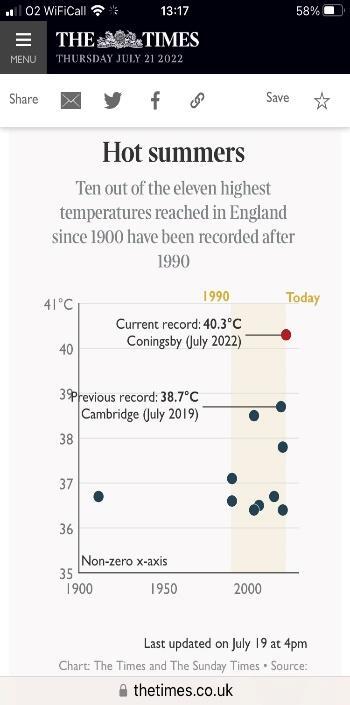
Climate change scientists predicted a steady climb in ambient temperatures and earlier this week we experienced record high temperatures across large areas of the UK with several places competing to be the top UK hot spot. The winner wasn’t far from here - in fact Coningsby Lincolnshire. Coupled with the heat, over the past few months we have had very little rainfall – and Fire brigades all over the country have had to deal with wild fires. London Fire Brigade had its worst day since the Blitz in WW2. I think everyone is expecting a hosepipe ban before too long. All this after we had floods locally a few months ago!
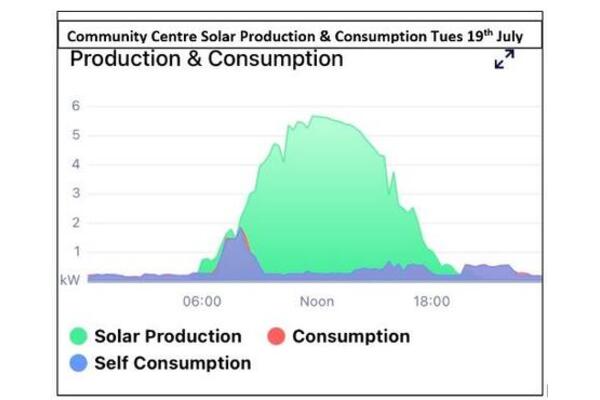
We all know we can’t do much to influence these climate variations and extremes in the short term but we do know we can start to address those changes in the longer term and mitigate rising energy prices. For those of us who want to make a difference, read later how Steve Sadler explained at our meeting in May how he got started on understanding your role in sustainable living.
However, we know that harnessing both sustainable and UK produced energy makes sense; even if in the short to medium term if it is partly fossil fuelled and maybe we should also consider nuclear generators for the longer term. All these approaches will help by making us less vulnerable to global influences. It makes even more sense that all of us should consider what we can to reduce our energy consumption and thereby reduce carbon emissions; a win-win saving money and doing something towards becoming carbon neutral.
Two slogans came to our attention recently; ‘Heat or Eat?’ and ‘Homes fit for the future’. It is also clear that before anyone invests in solar panels, heat pumps and batteries, the right thing to do is to ensure the fabric of your building – be it a home, a community building or business premises- is to get it up to scratch. It is pointless putting solar panels on the roof if it can’t take the weight or will soon need repairs. We discovered this when looking at solar panels for the church hall roof. The first task there was to upgrade their insulation and change the lights to LEDs. Both measures would help them save money on running the building.

Thermal imaging surveys of our Community Buildings have revealed gaps in roof and wall insulations and highlighted where heat was being lost. The best insulation was found at the Cricket Pavilion where insulation was added to the outside walls in 2019.
Everyone knows where the obvious draughts are in their building – our advice is to fix them now. Energy prices are rising again this autumn – so look upon your outlay in draughtproofing and extra insulation as an investment for the future.
A home thermal imaging survey later this year will help detect further heat leaks and identify cold draughts you hadn’t suspected. Our camera is available to everyone to conduct a survey.
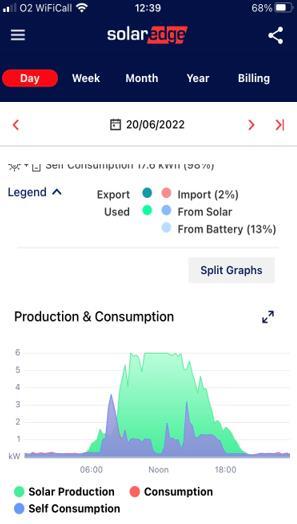
We are pleased to say ‘very well’ and ‘very timely’ given the rise in energy costs. 20thJune this year was gloriously sunny as our records show; a mid-summer day so we had just about the maximum amount of daylight possible. Two things resulted, we registered record electricity production and as you can see on the graph on the right – we reached our maximum potential of 6kWh production for several hours that day. This is the most we are allowed to export to the grid. It is worth remembering that the maximum number of panels you can install is not limited by your roof capacity but by your local power distributor who assesses the local power cable carrying-capacity.
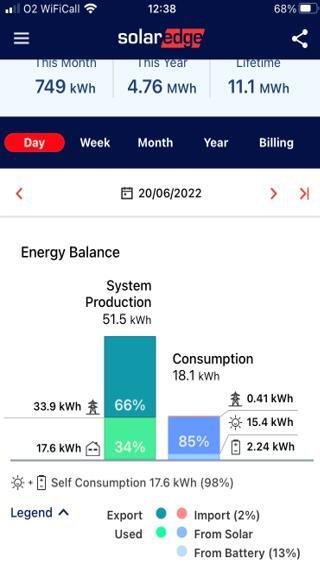
Most houses are capped at 4kWh. The Community Centre would have been capped at this amount but our installer discussed our situation and we installed 24 panels giving 7.8 kWh production but with a 6kWh export cap. This allowed us more in house consumption and would later feed our proposed air source heat pump. Because of the CC roof configuration, we were assured that there would be very few occasions when we would exceed the 6 kWh and this has proved to be the case. Despite the record production on June 20th, we still imported 2% of the power consumed that day. This is because there is always a ‘spike’ in demand when equipment is switched on which can only be met from the grid.
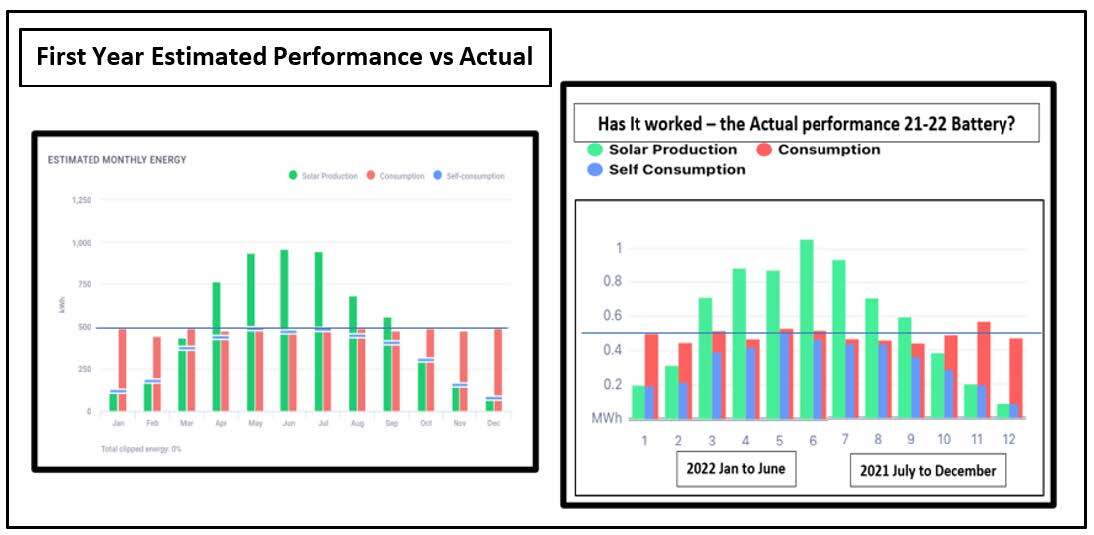
Since the last update we have now had the panels and battery installed for a full year.
Has it met our expectations? A resounding Yes! We are off to a good start.
The most pleasing aspect is that the actual performance has just about matched the pre-purchase estimate provided by the supplier as you can see below.
After the fantastic news of further grants earlier this year we can report that behind the scenes, the School and the Community Centre are working towards installing their heat pumps and additional works; LED lights will go into the school and further energy saving works at the Centre. The Cricket Club is also beavering away to find money to complement the grants already received for their biodigester.
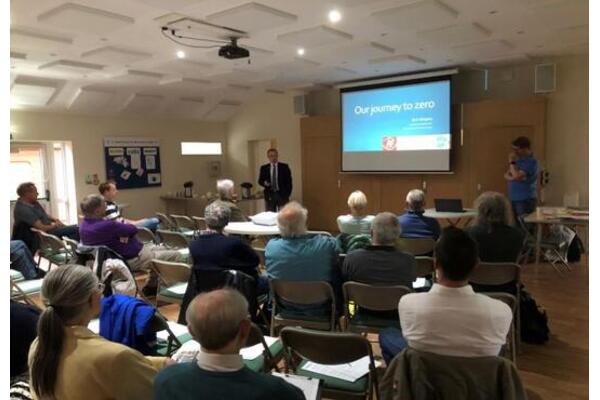
On May 23rd we held a public meeting and gave five key presentations.
Rick Weights gave an update on the school project, Chris Hailey-Norris of Selby AVS explained the importance of community engagement for obtaining any funding and for developing local government policies appropriate to our area.
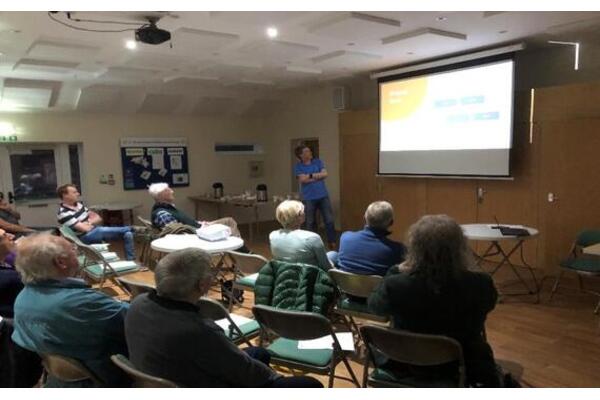
Steve Sadler from the Cricket Club introduced GiKi – a personal Carbon Footprint calculator app that makes it easier to live sustainably. We were amazed when Steve told us that his annual carbon emissions are over 9 tonnes – by contrast the annual emissions saved by the solar panels at the Community Centre are 2 tonnes. It’s not hard to see where we have to take action – it is down to each of us to do something.
Finally, Robin Parkin described how he has reduced his family’s electricity bill by almost 40% since April. There were gasps of amazement but what became clear was that monitoring your usage and then controlling it paid big dividends.
Many who attended were already familiar with some of the features of solar panels, heat pumps and batteries but many wanted details of how to maximise the benefits. All were happy to share their experiences, which is the whole point of this project, as it is a learning process. We aim to add these stories to our new website which is also under development.
Everyone is invited to the School between 10am and 12noon on Monday 1st August to see the Ground Source Heat Pump installation work as it is progressing. It is not often we will get a chance to see this – so do take the opportunity. Later, on Tuesday evening 11th October-we are holding a public meeting in the school to showcase the new heat pumps and other work there. Please save the date as the evening is bound to be interesting with both an air source, ground source heat pumps and other work on show.
Also, later this year we will also be hosting an interesting range of speakers, who will brief us on a variety of topics – all aimed at living in a sustainable way. Please look out for further information.
Thank you for your support. The Steering Group and Project Partners
