2021 - The Year we started to make a difference
Sustainability Project Update #8

A Happy New Year to all our readers. We hope that the solid progress we have made with the help and support of many people continues in 2022 and that ‘the lessons we learn’ and share with others will be useful. Someone once said – ‘there’s no need to make the same mistakes to gain the benefit of past experience’. One of our main aims at the outset of the project was to share our learning and as you will read later, we are delighted that this is happening. During 2022 we hope to develop this further as we start to record and document the case studies arising from our activities.
Another saying is ‘one picture is worth a thousand words.’ In our case, it will be two pictures of the exhibition we were able to stage in November at the Yorkshire Green Public Consultation Day which captures an excellent year.
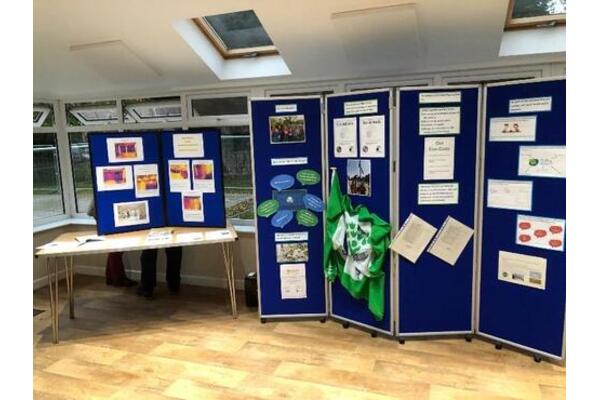
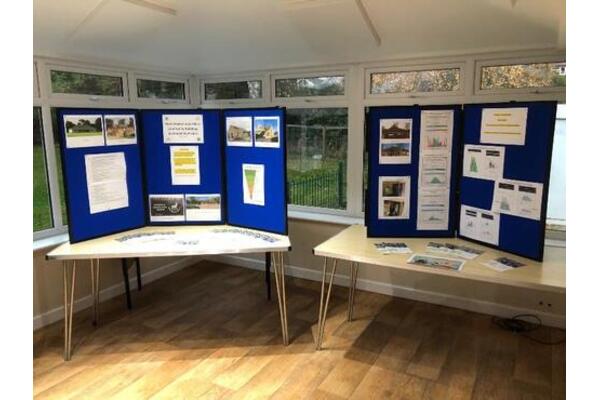
As you can see, quite rightly, the centre piece of the exhibition was the comprehensive display of the sustainability work which the school has undertaken during the last year or so, which culminated in attaining the Eco Schools Gold ‘Eco Flag’ status. The consensus of opinion from residents who visited the event was that we had achieved a lot in a short time. This was echoed by the National Grid staff who were present to explain the Yorkshire Green Project and help answer questions which arose.
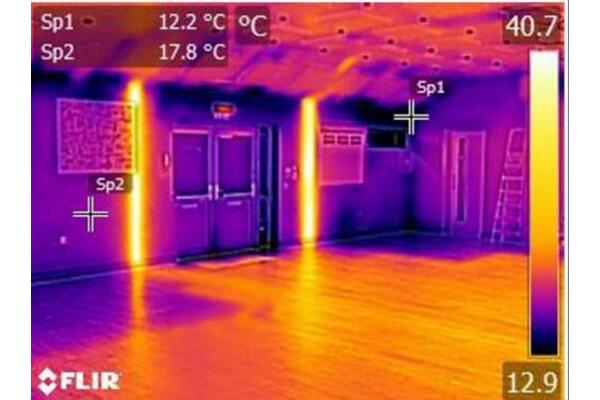
Consequently, we received a request and an offer. The request from one member of the Staff was ‘can I have one’ when she saw the Thermal Imaging Camera survey photographs of the Community Centre. The offer was to return to the village later to give us an update of the Yorkshire Green Project and its potential local impact.
An encouraging and important item also came to light from the Yorkshire Green consultation related to the planned transition to sustainable electricity. We have all heard of ‘undersea interconnectors’ which allow us to import electricity from our near continental neighbours. This new item was going a few steps further.
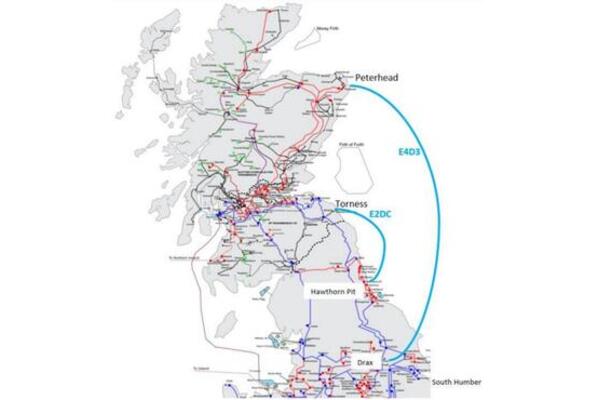
The map shows two big loops under the sea – one linking Torness Nuclear Power station to Blyth in Northumbria. This is intended to feed sustainable electricity into the upgraded national grid; the second loop is from Wick in the north of Scotland to the Yorkshire Coast. Wick is the gathering point for all electricity generated by wind turbines in the North East of Scotland; after landfall in Yorkshire, the power will be routed via Drax to the proposed upgraded substation complex in Monk Fryston.
They also told us of plans for interconnectors to receive geothermal generated electricity from Iceland, and hydro generated electricity from Norway. These links will provide 24/7/365 supplies, thus starting to overcome the question of how do we replace ‘on demand fossil’ fuels.
Every cloud has a silver lining…. or so they say, we will let you be the judge from our next item – an update on the work undertaken by the team looking into making the Church Hall carbon neutral.
In early 2021 the team started to assess the Hall’s thermal qualities by doing a thermal imaging survey – it looked ok – nothing stood out but then it wasn’t easy to do as we were still in lockdown and the hall was hardly being used, so not much heat was being put into the hall. By mid-year when the 5 year Quinquennial Inspection was undertaken by the Church Architect and also surveys by the contractors providing quotes for solar panels; it became clear that there were concerns with the roof. One of them said ‘I think we would need to check the roof structure to assess if it could take the weight of the panels’. NB Lesson no 1 Today if anyone is contemplating adding weight onto roof rafters – which could be solar panels or using them for storage – first assess if they are designed for any additional load.
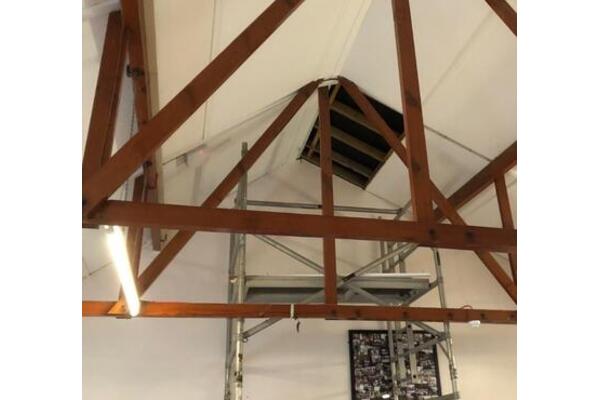
Around the same time the architect’s report noted the slight deflection in the 1970s Church Hall roof which should be investigated.
Since then, a full structural survey has taken place, which included removing a ceiling panel to investigate the deflection and this revealed that there was no insulation in the roof. The report recommended strengthening particularly if the intention is to add solar panels or install Energy Saving Insulation. We are now assuming that the whole of the original building has no insulation. NB Lesson no 2 Do you need to check your roof insulation depths and is your draught proofing effective? We all know that energy prices are set to rise significantly.
We think that cloud did have a silver lining! We had already gone quite a long way in developing a plan to obtain funding for improvements to make the Hall more energy efficient and be powered by renewable energy. The architect’s inspection and report has set us on the path of doing it properly.
Whilst talking about clouds, both the School and the Community Association are waiting to hear where they stand with their applications for funds for the next stages of their projects. The school applied to Salix for a loan to carry our major renewable energy works, and the Community Association applied for a 2 year Lottery grant to share the project partners learning and install an Air Source Heat Pump and energy efficiency improvements to the Centre. The data from our projects and the sustainability information gathered so far will be shared with residents and similar communities and organisations further afield, so people can understand what can be done and how to go about it.
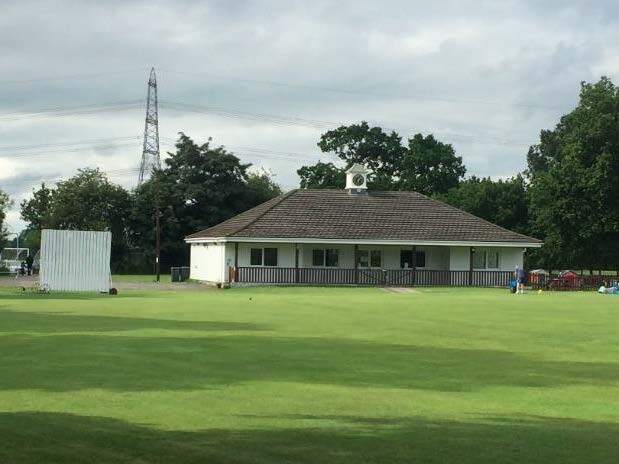
The Cricket Club is set to go. Investigative work has started on their most pressing requirement: to replace the existing Cess Pump with a Biodigester. Currently the Cess pit handles all the effluent from the Cricket and Football Clubs. We are pleased to report that North Yorkshire Councillor Chris Pearson has agreed to support it with a grant of £1.5k from his locality fund. Our District Councillor John Mackman has also agreed to support this very important project and has applied to Selby Council to approve a grant of £2.5k. These two grants, along with the Cricket Club’s share of the income from the November Village Firework display means we are £5k towards our target of £29k. We hope some of the cost will be met by self – help i.e. doing the work ourselves! We just have to find the rest – if anyone has any fund-raising ideas - please let us know.
We held a Thermal Imaging Training Course one Saturday morning in late November 2021. Jon Blaza very kindly acted as course leader and instructor and brought his camera along as well our own. The course attendees were fascinated to learn how to get the best results from the camera using the most appropriate settings and how to record and store the pictures for future reference. Some of the course attendees have since used the camera on their homes and it has set everyone thinking about how to apply the information to cut their energy bills and make their homes warmer. When one Hillam resident, who is about to move homes, heard his neighbour had the camera, he asked to borrow it to survey his prospective new house – so he would know what he was ‘buying into and what he needed to do for the future’. NB Lesson no 3 Going forward, we need to monitor the most effective ways to retrofit or improve the insulation of our homes, be it roofs, walls, floors or draughtproofing doors and windows. There are many options out there to buy and Thermal Imaging is just the first step.
So far, we have learnt new things every time we attempted to do something in this project. We recognised at the outset that we should document what we learnt, what mistakes were made by ignorance or by not asking the right questions. We are starting to gather this information to share with everyone via our website as case studies and at future public events. So please start to look out for them.
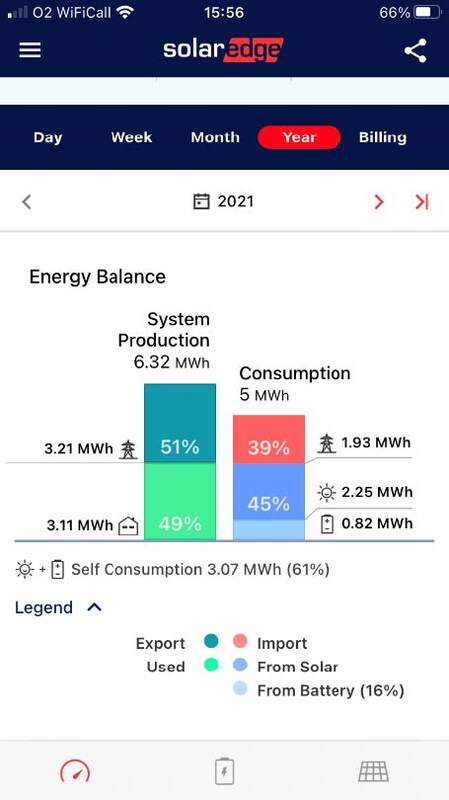
Our last topic for this update is a review of the performance data gathered from the Solar Panels and Storage Battery at the Community Centre. You may recall we installed the panels in March and the battery in May 2021, so we have now nine months data. Throughout that period, we have had no faults with the equipment although the Solar Edge app mysteriously did stop performing for 24hrs for some reason and then restarted itself!
You can see in those 9 months we generated about 25% more power than we consumed, providing just over 60% of our needs and the battery supplied roughly 25% of our self-consumption which is 820 kilowatts, which we would otherwise have to buy.
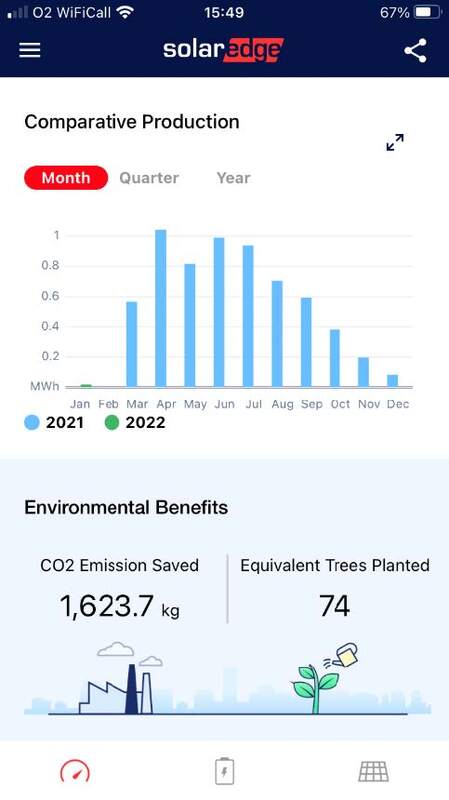
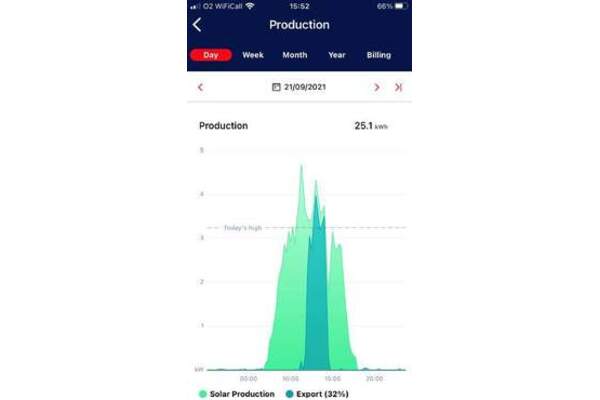
December 2021 was a grey, cloudy month, but do you recall how sunny May 2021 was? This is well illustrated by the solar production profile on the left. However, we will have to wait to see if May was dull or July sunny by making comparisons with other years to come. We are not quite sure if the CO2 savings are correct, nor how the tree planting data is calculated… but it looks good. One thing for certain is that we have started to reduce our CO2 emissions.
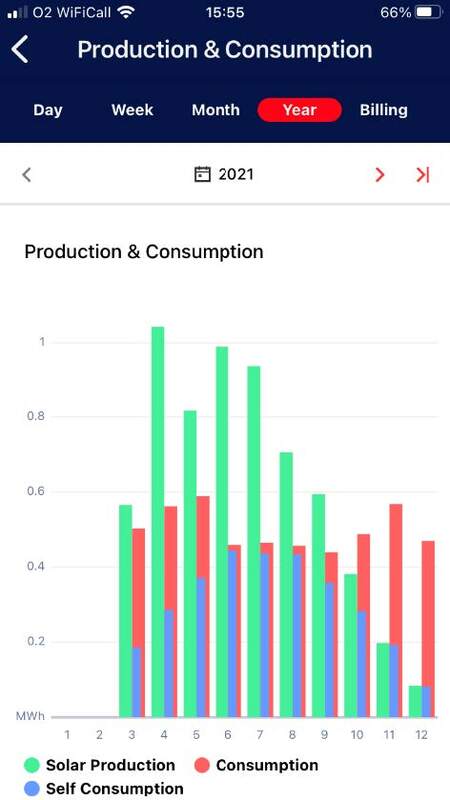
On the other hand, we do know we are making a difference at the Community Centre because the graph on the right clearly illustrates the impact of our solar generation and battery installation during May when we consumed much more of the electricity on-site and for 3 months, we were almost self-sufficient 24 hrs a day.
One thing which lots of people ask us is, how much electricity do the panels generate? Another thing we ask ourselves is should we have additional battery capacity? Until we have at least a full year’s data we won’t know if we need additional battery capacity. Well, in keeping with our aim to look objectively at the data, we can see that the most electricity generated on a single day was almost 50kwh, and it won’t surprise you to know that on some of the dark days in December, none was generated at all.
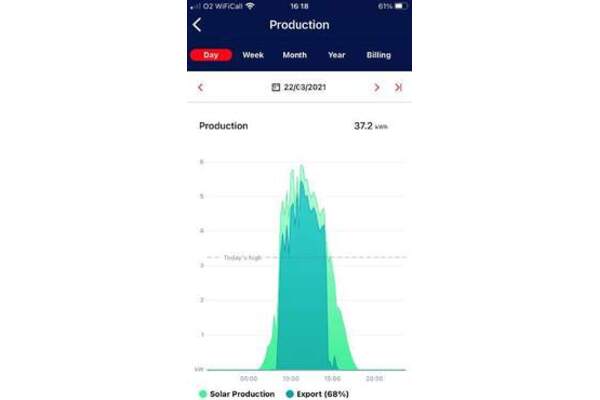
Generation period
6.15am to 6.15pm
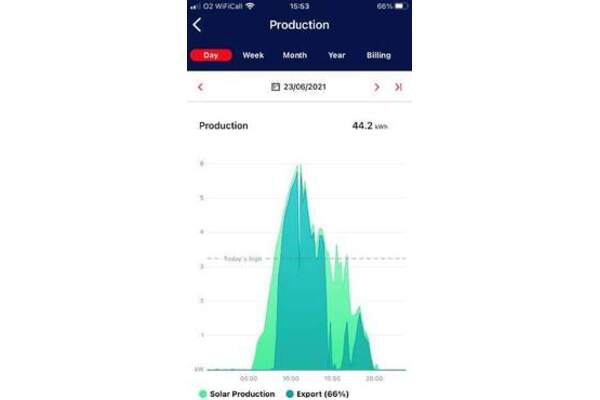
Generation period
5.15am to 8.30pm
Generation period
6.45am to 6pm
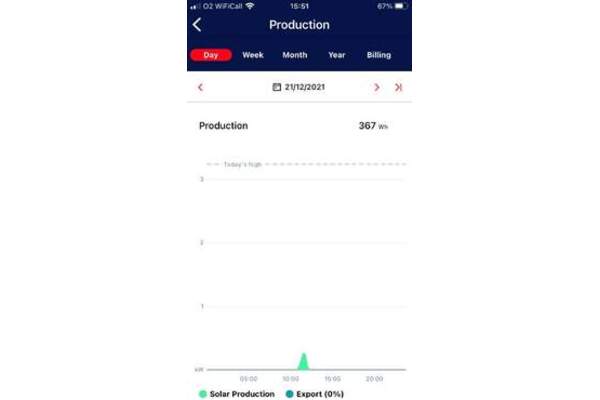
Generation period
10.45 am to 12.15pm
Normally 8.30am to 4pm
Are solar panels any good in winter? Do they produce anything worthwile? And, If you aren’t producing much electricity is it worthwhile having a battery? See below for a bit more information.
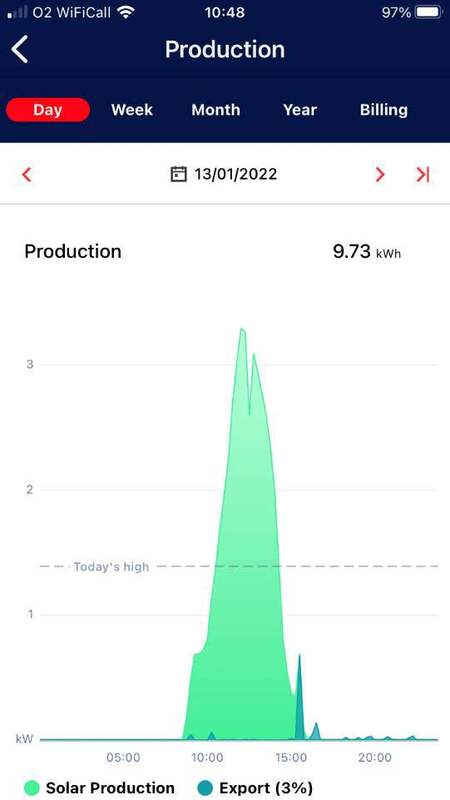
We have had a few bright days in January and as you can see on the left, Thursday 13th January was a bright sunny day from dawn to dusk. We generated almost 10kwh of electricity and even exported a little around 3.30pm after the battery was fully loaded.
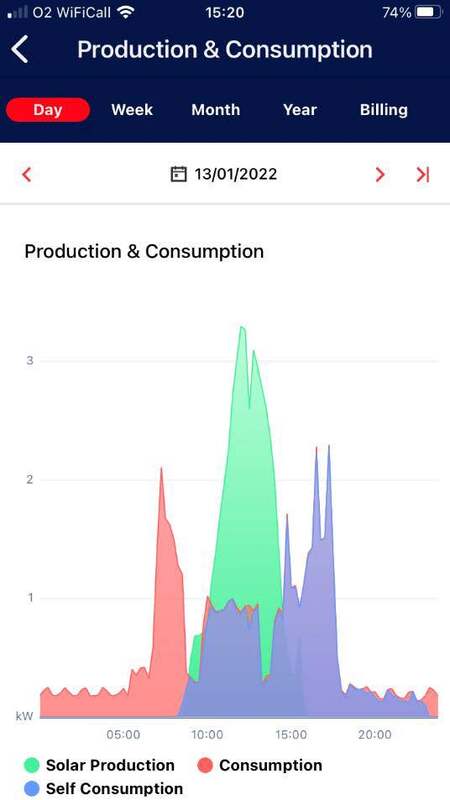
The Production and Consumption data profile for one day on the left shows how the solar panels and battery storage enabled the Centre to operate most of day on self-generated electricity as any surplus power through the day was stored in the battery to be used later during the national peak 4-7pm demand period.
We will update this information as we gather more data enabling us to compare it between years.
Finally, we hope you have heard of Our Zero Selby. This is a two-year project to try and shape the future of Selby as the UK steps up its efforts to tackle climate change. All Selby area stakeholders; whether its residents, businesses or community organisations are invited to get involved and have their say. You can find more and have your say by going to www.ourzeroselby.org.uk.
In March 2022 representatives of these Selby stakeholders will be using the feedback and creating the policies for the future they want. These meetings will be held at Monk Fryston Community Centre.
Thank you for your support.
The Steering Group and Project Partners
